
 English
 Views: 269 Author: Site Editor Publish Time: 2026-02-17 Origin: Site


Most outdoor furniture deteriorates within 3-10 years due to climate erosion, pest damage, or frequent maintenance—wasting budget and failing to retain long-term aesthetic appeal. Teak outdoor furniture, with its natural material properties, addresses these core pain points of outdoor furniture through durability, low maintenance costs, and aesthetic value, making it the top long-term choice for high-end outdoor spaces.
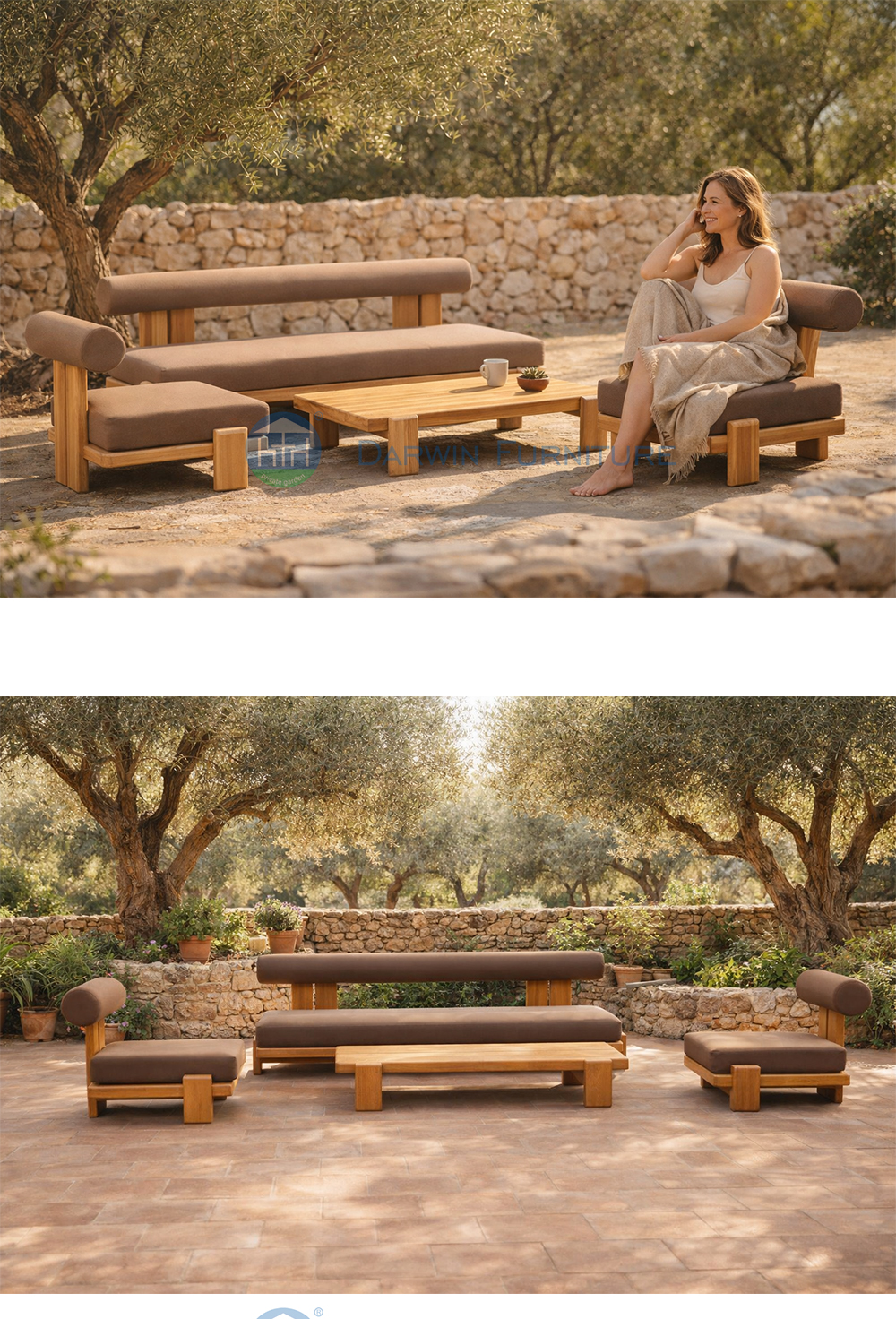
Teak contains high concentrations of natural oils and silica, forming an inherent “protective barrier”:
It resists rainwater, moisture, termites, and fungal decay. Even when exposed long-term to coastal salt spray or tropical rainforest humidity, it avoids rotting, warping, and cracking;
Its outdoor lifespan reaches 50-75 years, far exceeding ordinary solid wood (3-7 years), PE synthetic rattan (5-10 years), and metal furniture (4-8 years).
Its robust and stable wood structure withstands heavy loads and daily wear without concerns of frame loosening or surface damage.

Teak requires no chemical preservatives or frequent maintenance:
For a natural weathered look, simply clean crevices monthly with a soft brush and water to keep surfaces tidy;
To preserve its original golden-brown hue, apply teak oil once or twice yearly to maintain its warm luster;
Compared to solid wood requiring annual preservative painting or metal furniture needing regular rust-proof spraying, teak reduces both maintenance costs and time investment by over 70%.

Teak's aesthetic value continues to enhance with prolonged use:
New teak features warm golden-brown tones and fine, uniform grain patterns, exuding natural sophistication that complements modern minimalist, rustic casual, tropical resort, and other outdoor styles.
After prolonged outdoor exposure, it gradually develops a uniform silver-gray patina, blending vintage charm with the aura of time. This seamlessly integrates with garden greenery and stone flooring, elevating the space's sophistication without requiring additional decoration.

Teak offers both ecological and economic value:
As a fast-growing hardwood, teak reaches maturity in 18-20 years and is primarily sourced from plantation forests, making it a renewable resource that avoids the destruction of primary forests caused by illegal logging;
Its exceptionally long lifespan reduces furniture replacement frequency, lowering resource consumption. Simultaneously, teak sequesters significant carbon during growth, and finished furniture continues to store carbon long-term—aligning with eco-conscious consumption trends.
| Material | Lifespan | Annual Maintenance Frequency | All-Climate Adaptability | Aesthetic Longevity |
| Teak | 50-75 years | 1-2 times | Suitable for all environments | Improves with time |
| Ordinary Solid Wood | 3-7 years | 4-6 times | Only suitable for mild climates | Prone to fading/cracking |
| PE Rattan | 5-10 years | 3-4 times | Needs protection from extreme climates | Prone to deformation/shedding |
| Metal (Wrought Iron) | 4-8 years | 2-3 times | Prone to rust (in humid environments) | Coating easily peels off |


