
 English
 Views: 0 Author: Site Editor Publish Time: 2026-02-09 Origin: Site


Designing an outdoor space that feels comfortable, functional, and visually balanced is no longer limited to large gardens or luxury resorts. Today, patios, balconies, terraces, and backyards of all sizes can become inviting living areas—with the right patio furnitures layout.
From compact urban balconies to expansive outdoor lounges, how you arrange your patio furnitures—especially sofa-focused seating—directly impacts comfort, traffic flow, and how often the space is actually used. A poorly planned layout can make even premium furniture feel cramped or underutilized, while a thoughtful arrangement can turn modest outdoor areas into true extensions of indoor living.
As manufacturers and suppliers of outdoor sofa-based patio furnitures, we’ve seen how layout decisions affect real-world use. In this guide, we share practical layout strategies for both small and large outdoor spaces, helping you maximize seating, improve functionality, and create a balanced outdoor environment that works in everyday life—not just in catalogs.
Many homeowners assume that outdoor comfort depends mainly on space size. In reality, layout matters more than square meters. The same sofa set can feel crowded in one patio and perfectly balanced in another, depending on orientation, spacing, and circulation.
A well-planned patio furnitures layout helps to:
Improve seating comfort and usability
Define activity zones (lounging, dining, conversation)
Maintain natural movement paths
Enhance visual balance and openness
Make outdoor sofas feel lighter and more inviting
Whether you’re working with limited space or a large open area, layout should always start with how the space will be used, not just how it looks.
Before dividing layouts by space size, several universal principles apply to all patio furnitures planning. These fundamentals help ensure that any outdoor space—regardless of size—remains comfortable, functional, and visually balanced over long-term use.
Sofas are the largest and most dominant patio furnitures elements, both physically and visually. Because of their size and seating capacity, they naturally determine how the rest of the space functions. Always position sofas first, then build around them with coffee tables, side tables, rugs, and accessories.
From a practical perspective, sofa placement defines the main activity zone of the patio. Whether the space is used for conversation, relaxation, or casual entertaining, the sofa establishes orientation and flow. Once the sofa is correctly positioned, smaller items can be adjusted more easily without disrupting the overall layout.
Outdoor spaces should feel open and easy to move through. Avoid blocking doors, stairs, or main walking paths with patio furnitures. A minimum clearance of 75–90 cm around seating areas ensures smooth movement, prevents accidental collisions, and improves overall comfort.
Clear walkways are especially important for high-use patios, hospitality environments, and family spaces. Poor circulation not only causes inconvenience but also accelerates furniture wear due to repeated contact and repositioning.
Every successful patio layout benefits from a visual and functional focal point. This could be a fire pit, coffee table, outdoor rug, garden view, or even a water feature. Sofas should face or frame this focal point to encourage natural interaction and visual harmony.
Without a focal point, outdoor layouts often feel scattered or unfinished. Anchoring sofas around a central element helps organize the space and gives the patio a clear purpose, whether for social gatherings or quiet relaxation.
Furniture proportion is critical. Oversized sofas overwhelm small patios, while undersized seating looks lost in large outdoor areas. The goal is balance—furniture should complement the space rather than dominate it.
Proper scaling improves comfort, aesthetics, and long-term usability. It also allows accessories like tables, lighting, and décor to integrate naturally without crowding or visual imbalance.
Small patios, balconies, and compact terraces require careful planning, but they can be just as comfortable as larger spaces when sofa-based patio furnitures are chosen and arranged wisely. The key is maximizing usability while maintaining openness.
For smaller areas, opt for:
Two-seat or loveseat outdoor sofas
Slim-profile frames
Armless or low-arm designs
These designs reduce visual weight while still offering full seating comfort. Slim frames and lower armrests allow the eye to travel freely across the space, making the patio feel larger than it actually is.
A compact L-shaped patio sofa placed in a corner is one of the most efficient solutions for small spaces. It maximizes seating capacity while preserving central floor area and circulation paths. Corner placement also naturally defines the lounging zone without requiring additional furniture.
Avoid fully enclosing small spaces with furniture on all sides. Leaving one side open improves airflow, increases visual depth, and prevents the patio from feeling boxed in. This openness is particularly important for balconies and narrow terraces.
In compact outdoor areas, every piece should earn its place. Choose patio furnitures that perform multiple functions:
Sofa with hidden storage
Coffee tables that double as stools
Side tables that also function as planters
These pieces reduce clutter while improving practicality, especially in spaces with limited storage options.
Layout Element | Recommendation |
Sofa size | 2-seat or compact L-shape |
Sofa placement | Against wall or corner |
Table choice | Small round or nesting table |
Spacing | Keep at least one open side |
Accessories | Minimal, vertical emphasis |
Medium-sized patios offer more flexibility but still benefit greatly from intentional layout structure. Without planning, these spaces can feel either overcrowded or underutilized.
Arrange sofas in an L-shape or U-shape around a coffee table to encourage face-to-face interaction. This layout works well for social gatherings and creates a natural focal point within the space.
Resist the temptation to fill every corner with furniture. Leaving open areas improves comfort, enhances visual clarity, and allows the patio to adapt to different activities over time.
Complement your patio sofa with:
Lounge chairs
Ottoman seating
Modular corner pieces
This mix adds flexibility and visual interest without overwhelming the space. It also allows seating to be adjusted based on group size or occasion.
Large patios offer freedom—but without planning, they can feel empty or disconnected.
Instead of one oversized sofa set, divide the patio into functional zones:
Lounge zone with sofas
Dining or bar area
Relaxation or fire pit zone
This makes the space more usable and inviting.
Outdoor sofas act as natural dividers. Position them back-to-back or perpendicular to visually separate zones without walls.
Modular patio furnitures allow flexible configurations and better fill large areas without looking sparse.
Zone Type | Sofa Layout Suggestion |
Lounge area | U-shaped or modular sectional |
Fire pit area | Sofas facing inward |
Poolside | Linear sofas with side tables |
Entertainment | Sofas oriented toward focal feature |
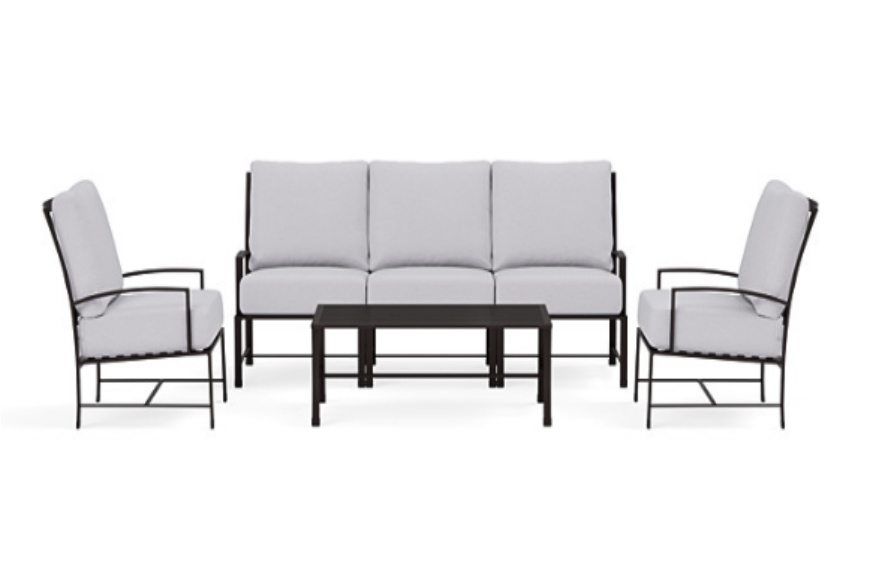
Layout success also depends on selecting the right sofa designs.
Low-profile frames create openness. Deep seating improves relaxation, especially in large spaces.
Balanced cushion thickness improves comfort without overwhelming the layout.
Neutral tones help sofas blend naturally into outdoor environments and make spaces feel larger.
Even high-quality patio furnitures can feel uncomfortable if layout mistakes are made.
Overcrowding the space
Ignoring walkways
Pushing all furniture against walls
Using indoor-scale layouts outdoors
Choosing sofas too large or too small for the area
A smart layout prioritizes comfort first, aesthetics second.
Well-designed patio furnitures layouts:
Increase seating efficiency
Reduce wear and tear
Improve guest interaction
Make outdoor spaces usable year-round
From our experience, customers who invest time in layout planning enjoy their outdoor sofas more frequently and for longer periods.
A successful patio furnitures layout isn’t about copying showroom designs—it’s about understanding space, movement, and how people naturally gather. Whether you’re working with a small balcony or a large outdoor lounge, the right sofa-focused layout transforms outdoor areas into comfortable, functional living spaces.
At www.axoutdoor.com, we focus on outdoor sofa-based patio furnitures designed to adapt to different layouts and space sizes. If you’re planning or upgrading an outdoor area, understanding layout principles is the first step toward creating a patio that truly works for everyday life.
Q1: What patio furnitures work best for small spaces?
Compact patio sofas, L-shaped sectionals, and multi-functional furniture are ideal for maximizing seating without overcrowding small patios.
Q2: How should patio sofas be arranged for conversation?
Sofas should face each other or be arranged around a central coffee table to encourage natural interaction and comfort.
Q3: Can large patios use multiple sofa sets?
Yes. Dividing large patios into zones with multiple sofa arrangements improves usability and prevents the space from feeling empty.
Q4: How much space should be left around patio furnitures?
A clearance of 75–90 cm around sofas and walkways ensures comfortable movement and a balanced layout.


