
 English
 Views: 0 Author: Site Editor Publish Time: 2026-02-07 Origin: Site


Outdoor living spaces have evolved far beyond simple patios with a few chairs and a table. Today, patios, terraces, balconies, and gardens are increasingly viewed as extensions of indoor living areas—places for relaxation, social gatherings, and everyday comfort. At the heart of these spaces lies one essential element: patio furnitures, especially well-designed outdoor sofas that combine comfort, durability, and style.
Choosing the right patio furnitures is not simply about appearance. Outdoor environments present unique challenges, including exposure to sunlight, rain, humidity, and temperature changes. For this reason, selecting suitable materials, structures, and cushion systems is critical to ensuring long-term usability and comfort. Outdoor sofas, in particular, must balance ergonomic design with weather resistance while maintaining visual harmony with the surrounding space.
From compact balconies to expansive garden lounges, the right patio sofa can transform how an outdoor area is used. In this guide, we share practical insights on how to choose patio furnitures—especially outdoor sofas—that align with functional needs, aesthetic preferences, and long-term performance expectations.
Before selecting any patio furnitures, it is important to assess how the outdoor space will be used.
Is the space used for daily relaxation or occasional gatherings?
How many people typically use the area?
Is the space exposed to direct sunlight, rain, or wind?
Is the layout fixed or flexible?
For example, a family-oriented patio may benefit from modular outdoor sofas that allow flexible configurations, while a compact balcony may require a streamlined two-seat sofa with minimal footprint.
Outdoor Space Type | Recommended Sofa Style |
Small balcony | Compact loveseat or sectional |
Medium patio | L-shaped outdoor sofa |
Large garden | Modular sofa sets |
Poolside area | Weather-resistant lounge sofas |
Proper planning helps ensure that patio furnitures enhance comfort without overcrowding the space.
Among all patio furnitures, outdoor sofas play a central role in defining comfort, usability, and spatial identity. Unlike dining chairs, stools, or loungers that serve specific, often short-term purposes, outdoor sofas are designed for extended use. They support longer periods of sitting, conversation, and relaxation, making them the functional and emotional centerpiece of an outdoor space.
In residential and commercial outdoor environments alike, sofas establish a sense of permanence. They visually anchor patios, terraces, and gardens, helping transform open areas into intentional living zones rather than transitional or unused spaces. From a design perspective, outdoor sofas provide scale and structure, allowing other patio furnitures—such as side tables, coffee tables, and accent seating—to be arranged cohesively around them.
Outdoor sofas contribute to both functional performance and user experience:
Encourage social interaction
Sofas naturally promote face-to-face seating arrangements, making them ideal for gatherings, casual meetings, or family use.
Offer superior comfort compared to single chairs
Deeper seats, supportive backrests, and integrated cushions allow users to remain comfortable for longer durations.
Create a living-room-like outdoor atmosphere
Sofas blur the boundary between indoor and outdoor spaces, supporting the trend toward outdoor living rooms.
Provide visual structure to outdoor layouts
As anchor pieces, sofas define seating zones and improve overall spatial organization.
Because of these advantages, outdoor sofas are often the first item selected when planning patio furnitures, with other pieces chosen to complement their size, style, and function.
Material choice is one of the most critical factors when selecting patio furnitures, particularly outdoor sofas that must withstand constant environmental exposure. Unlike indoor furniture, outdoor sofas are subjected to sunlight, moisture, temperature fluctuations, and airborne contaminants, all of which can significantly affect longevity if materials are poorly chosen.
The frame determines the structural stability and service life of an outdoor sofa.
Material | Advantages | Considerations |
Aluminum | Lightweight, rust-resistant | May feel cooler in winter |
Steel (powder-coated) | Strong, stable | Requires high-quality coating |
Teak wood | Natural, durable | Needs periodic care |
Synthetic rattan | Weather-resistant, flexible | Quality varies by grade |
For outdoor sofas, aluminum and synthetic rattan frames are widely preferred due to their balance of durability, corrosion resistance, and low maintenance. Aluminum is especially valued in humid or coastal environments, while high-grade synthetic rattan offers visual warmth combined with structural resilience.
Cushions are critical to both comfort and performance. Outdoor cushions must resist moisture absorption, UV degradation, and compression fatigue.
Fabric Type | Performance |
Solution-dyed acrylic | Excellent UV resistance |
Olefin | Water-resistant, durable |
Polyester (treated) | Cost-effective, versatile |
High-density foam with quick-dry and open-cell properties significantly improves comfort, prevents water retention, and extends cushion lifespan. Well-designed cushion systems ensure that outdoor sofas remain comfortable and visually appealing even after repeated exposure to outdoor conditions.
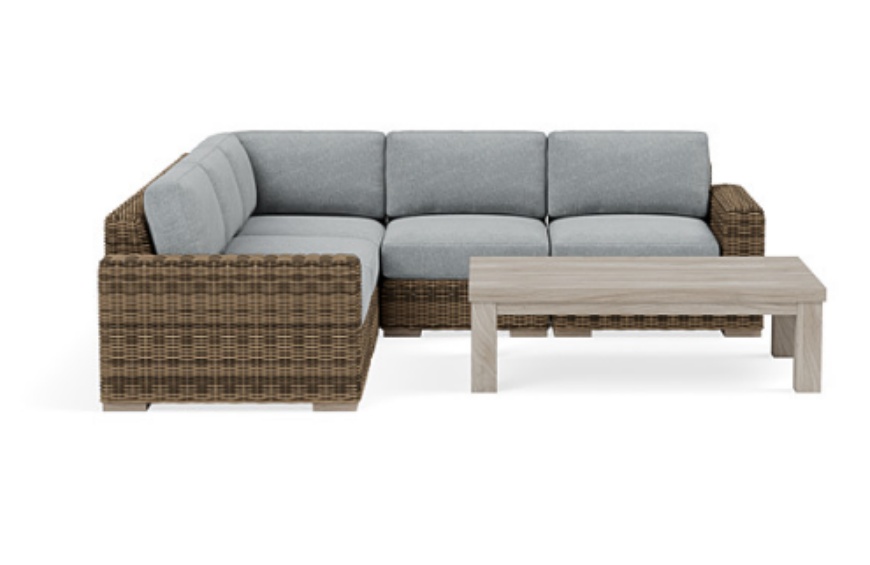
Comfort should never be compromised when choosing patio furnitures, especially when outdoor spaces are intended for extended use rather than occasional seating. Outdoor sofas, in particular, should provide ergonomic support comparable to indoor furniture while also accommodating the environmental demands of outdoor use. Well-designed ergonomics directly influence how long users remain seated, how often the space is used, and overall satisfaction with the furniture.
Seat depth suitable for lounging
Adequate seat depth supports a relaxed posture without forcing users into overly upright or slouched positions. A well-balanced depth allows users to sit comfortably while still providing proper back support, making the sofa suitable for both casual conversations and longer relaxation periods.
Proper backrest angle
A carefully calibrated backrest angle reduces lower back and shoulder strain. Sofas with overly straight backs can feel rigid, while excessive reclining can reduce support. An ergonomic angle helps distribute body weight evenly, enhancing comfort during prolonged use.
Balanced cushion firmness
Cushions should be supportive without feeling rigid. High-quality outdoor sofas use foam that retains shape over time while still offering sufficient softness. Proper firmness prevents sagging, maintains seating posture, and improves long-term durability.
Armrest height for relaxation
Correct armrest positioning improves overall posture and usability. Armrests that are too low or too high can cause discomfort, while well-positioned armrests provide natural support for shoulders and arms.
A well-designed outdoor sofa encourages extended use without discomfort, reinforcing the patio as a functional living space rather than a purely decorative area.
Modern patio furnitures increasingly feature modular outdoor sofa systems, reflecting growing demand for flexibility and adaptability in outdoor layouts.
Type | Advantages | Best For |
Modular sofas | Flexible layouts | Multi-use spaces |
Fixed sofas | Stable structure | Defined seating areas |
Modular outdoor sofas allow users to rearrange seating configurations to suit gatherings, daily relaxation, or seasonal adjustments. This adaptability is particularly valuable in commercial settings, hospitality venues, and multifunctional residential spaces where layout needs may change frequently. Fixed sofas, by contrast, offer a stable, permanent structure and are well-suited to clearly defined seating zones where layout consistency is preferred.
Outdoor environments demand patio furnitures that are not only durable but also easy to maintain. Long-term performance depends on protective design features, material treatments, and construction quality.
UV-resistant finishes to prevent fading and material degradation
Water-repellent cushion covers to reduce moisture absorption
Rust-resistant frames for long-term structural integrity
Breathable fabrics to prevent mildew and odor buildup
Proper maintenance—such as routine cleaning, allowing cushions to dry fully, and using protective covers during extreme weather—can significantly extend the lifespan of outdoor sofas. Well-maintained patio furnitures retain both comfort and appearance over time, delivering long-term value, reduced replacement costs, and consistent user satisfaction in both residential and commercial outdoor spaces.
Patio furnitures should complement both architectural style and landscape design.
Modern minimalist
Natural and coastal
Contemporary luxury
Rustic outdoor living
Neutral tones remain popular due to their adaptability, while accent cushions can add personality.
Choosing patio furnitures is a long-term investment. Durable materials and timeless designs reduce replacement frequency and environmental impact.
Factors that enhance long-term value:
Replaceable cushion covers
Modular repairability
Durable frame construction
Fade-resistant fabrics
Outdoor sofas designed for longevity offer better value over time compared to trend-driven alternatives.
Choosing the right patio furnitures—especially outdoor sofas—requires thoughtful consideration of space, materials, comfort, and durability. A well-selected outdoor sofa not only enhances comfort but also defines how an outdoor area is experienced and enjoyed.
At www.axoutdoor.com, we focus on designing outdoor sofa solutions that combine structural reliability, comfort-driven design, and materials suited for long-term outdoor use. Our approach emphasizes practical performance and timeless aesthetics, helping outdoor spaces remain inviting season after season.
Whether furnishing a private patio, a garden lounge, or a commercial outdoor area, selecting the right patio furnitures ensures your outdoor space becomes a place people truly want to spend time in.
1. What materials are best for patio furnitures used year-round?
Aluminum frames with UV-resistant fabrics are among the most reliable for all-season outdoor use.
2. How do outdoor sofas differ from indoor sofas?
Outdoor sofas are built with weather-resistant frames, quick-dry cushions, and UV-stable fabrics.
3. Are modular outdoor sofas practical for small spaces?
Yes, modular designs allow flexible layouts that can be adapted to limited areas.
4. How can I extend the lifespan of patio furnitures?
Regular cleaning, protective covers, and proper storage during extreme weather help extend durability.


