
 English
 Views: 153 Author: Site Editor Publish Time: 2026-02-10 Origin: Site


The optimal timing for replacing most outdoor patio furniture is often unclear. Replacing it too early wastes budget, while delaying replacement may lead to safety hazards due to structural deterioration or compromise the aesthetic appeal of the space through fading. The core criteria for determining replacement timing are the material lifespan and the actual degree of wear and tear. By analyzing the characteristics, lifecycle, and influencing factors of different materials, one can accurately pinpoint the right replacement moment while mastering techniques to extend longevity, ensuring outdoor furniture delivers maximum value.

1. PE Wicker Furniture
Lifespan: 5-10 years. Made from high-density polyethylene, it features UV resistance, waterproofing, and rustproofing, suitable for most outdoor environments. Key factors affecting longevity include prolonged sun exposure, heavy object compression, and sharp object scratches. Clear replacement indicators include: extensive cracking and peeling of the wicker weave, rusting and deformation of the metal frame, and foam cushions that collapse into lumps and fail to rebound.

2. Solid Wood Furniture
Lifespan: 3-7 years. Features a natural aesthetic but is susceptible to water damage, insect infestation, and UV fading. Replacement indicators include: deep surface cracks or rot in the wood, loosening of mortise-and-tenon joints causing wobbling, and extensive peeling of the finish exposing bare wood.
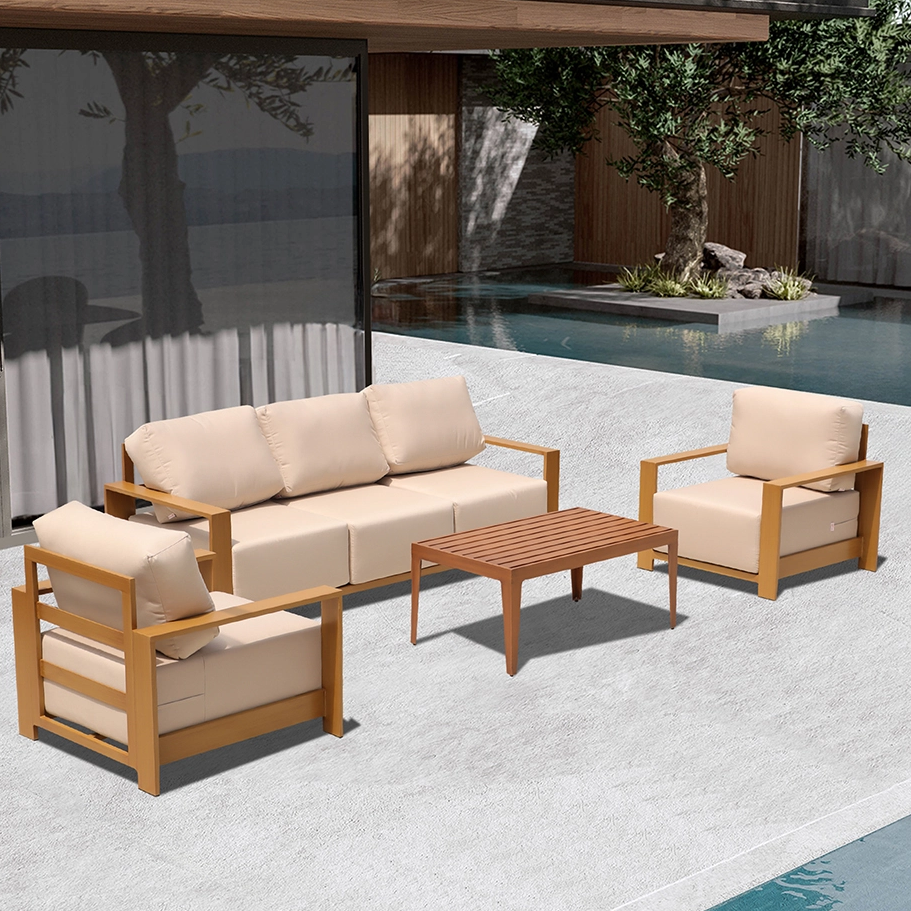
3. Metal (Wrought Iron / Aluminum Alloy) Furniture
Lifespan: 4-8 years. Sturdy and durable, but susceptible to moisture damage, salt spray corrosion, and deformation from impact. Replacement indicators include: rust-through fractures in metal frames, structural instability due to loose connectors, and peeling protective coatings with spreading rust stains.
4. Plastic Furniture
Lifespan: 2-5 years. Lightweight and affordable, but prone to degradation from heat deformation, UV-induced brittleness, and chemical corrosion. Replacement indicators include: cracking or shattering of the main structure, surface discoloration/whitening with loss of flexibility, and structural distortion rendering it unable to bear weight.
Material Lifespan Comparison Table
| Furniture Material | Lifespan | Core Influencing Factors | Key Replacement Signs |
| PE Rattan | 5-10 years | Sun exposure, pressure, scratches | Rattan shedding, frame rust, cushion collapse |
| Solid Wood | 3-7 years | Rainwater, pests, UV rays | Wood rot, loose joints, paint peeling |
| Metal | 4-8 years | Moisture, salt spray, impact | Frame rust-through, loose connectors, coating flaking |
| Plastic | 2-5 years | High temperature, UV rays, corrosion | Cracking, fading, structural distortion |
II. 5 Practical Tips to Extend the Lifespan of Outdoor Furniture
Regular Cleaning and Maintenance: Wipe crevices of wicker furniture with a soft brush and neutral detergent. Apply wood wax oil annually to solid wood furniture for moisture protection. Spray metal furniture with rust-proof spray periodically. Rinse plastic furniture with mild soapy water and air-dry.
Protective Storage: Cover furniture with waterproof dust covers during rainy seasons or winter. Store smaller pieces in garages or storage rooms to avoid prolonged exposure to extreme weather.
Optimal Placement: Avoid placing furniture in direct sunlight or areas prone to water accumulation. Keep away from salt-spray environments like pools or beaches to minimize accelerated material deterioration.
Repair damage promptly: Replace fallen rattan with matching strands, touch up cracks in solid wood with paint, sand rusted metal surfaces before reapplying protective coatings, and replace warped plastic components immediately.
Cushion care: Use waterproof, breathable outdoor cushions. Flip and air them regularly to prevent mold growth. Replace cushions with sagging high-density foam cores as needed.
