
 English
 Views: 265 Author: Site Editor Publish Time: 2026-03-24 Origin: Site


When creating a private outdoor retreat, many people find themselves torn between choosing an arbor, a pergola, or a gazebo—all three are outdoor structures, yet they differ vastly in function, design, and practicality. Today, we’ll break down the differences between them clearly, highlighting the pergola’s excellent value, flexibility, and ease of installation, to help you easily choose the ideal option for your garden.
Although all three can enhance the beauty and practicality of a garden, their design, structure, and intended uses are distinctly different. A simple comparison will help you identify the key differences and avoid making the wrong choice:
| Comparison Dimensions | Arbor | Pergola | Gazebo |
|---|---|---|---|
| Picture |
|
|
|
| Core Positioning | Landscape and decorative, with a focus on entrances and wayfinding | Practical and casual, designed to provide shade and create more space | High-end leisure-oriented, designed for full enclosure to provide shade and shelter from the rain |
| Structural Features | A small archway or flat-roofed structure with only 2–4 columns; the top is typically a simple truss and lacks a complete roof | Posts + open-style roof (customizable with a closed roof); can be erected as a standalone structure or attached to a building; simple structure | Mostly octagonal or circular in shape, with a fully enclosed pointed roof (featuring dome-like ornamentation), surrounded by railings or seating, and featuring a complex structure |
| Key Features | Used to decorate gardens and guide foot traffic; provides a surface for vines to climb; offers little shade and no protection from rain | Primarily designed for shade, with flexible adjustment options (add a canopy for rain protection); expands the outdoor leisure area; suitable for hanging decorations and placing furniture | Fully shaded and sheltered from the rain, this serves as the central gathering area of the courtyard, offering a completely private space. |
| Installation difficulty | Simple, but with limited weight capacity; suitable only for small decorative items | Extremely easy to assemble; choose from ready-made kits; reduce the number of support columns by attaching them to the house; even beginners can do it | Complex, requiring professional installation; involves many assembly steps, is time-consuming, and is costly |
| Value for money | Inexpensive but limited in function; serves mainly as a decorative item and has little practical use. | Great value for money, feature-rich, customizable, combining aesthetics with practicality, and offering a reasonable investment | Poor value for money; high material and installation costs; limited functionality; difficult to modify later on |
| Flexibility | Very low; fixed in terms of size and functionality, with no possibility of modification or expansion | Extremely versatile, with customizable dimensions (from 4×4 to custom large sizes) and canopy types (open/closed); portable and adaptable, suitable for gardens of all sizes | Extremely low; fixed dimensions and design; cannot be attached to the house; takes up a lot of space |
A comparison of the three reveals that the pergola strikes the perfect balance between aesthetics, practicality, and value for money, making it particularly well-suited for typical family backyards. Its core advantages lie in these three areas, which are unmatched by arbors and gazebos:

The Pergola offers far greater flexibility than the other two structures: for small 4×4 courtyards, you can choose a mini Pergola to create a cozy corner retreat; for spacious courtyards, you can customize a large 8-post model to cover the entire patio, poolside, or dining area. Even more flexible is the fact that it can be built as a standalone structure or attached directly to the exterior wall of a house, using the wall as one-sided support. This not only saves on material costs but also seamlessly connects indoor and outdoor spaces, instantly transforming balconies and patios into outdoor living rooms.
In addition, the pergola’s canopy can be freely customized: if you prefer an open, airy feel, keep the open lattice roof and pair it with climbing plants to create natural shade; if you need shelter from rain and sun, you can install a metal roof, a retractable canopy, or a shade sail, switching between “open” and “closed” modes with a single click to adapt to different weather conditions. This adaptable and adjustable nature allows it to evolve alongside your family’s changing needs, avoiding the limitations of a “one-time installation, fixed for life” solution.
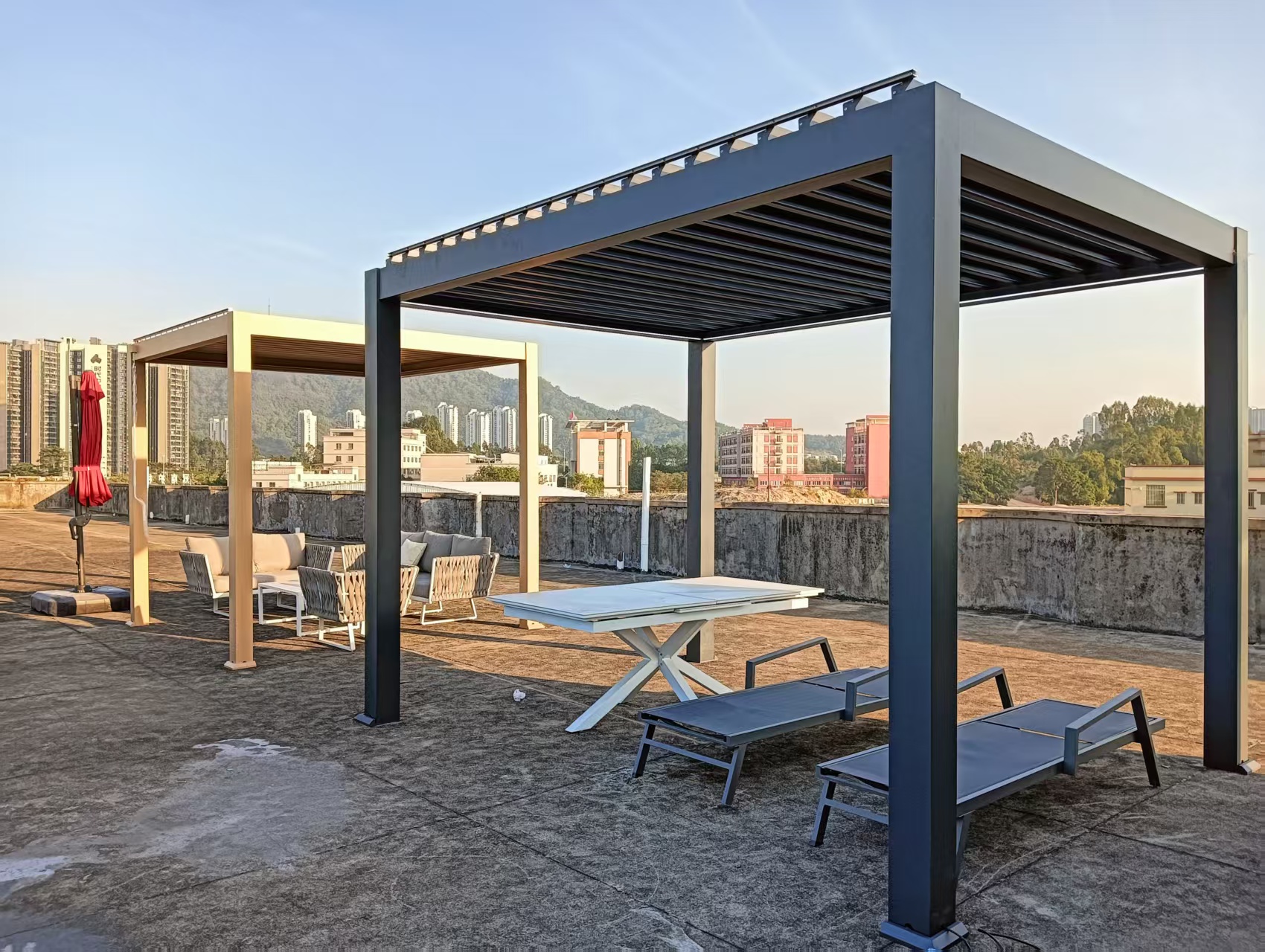
Unlike gazebos, which require professional installation crews and take several days to set up, Pergola’s ready-to-assemble kits significantly lower the installation barrier. The kit includes all prefabricated components and hardware, along with detailed assembly instructions. No complex tools are needed; with two to three people working together, assembly can be completed in a single day.
Even more convenient is that since the Pergola is attached to the house, there is no need to erect additional side posts. This reduces both construction steps and material costs, saving time and lowering installation expenses. Whether you install it yourself or hire a contractor for a simple setup, it offers clear advantages over the Arbor (which is simple but functionally limited) and the Gazebo (which is complex and expensive), truly delivering “quick installation and immediate use.”
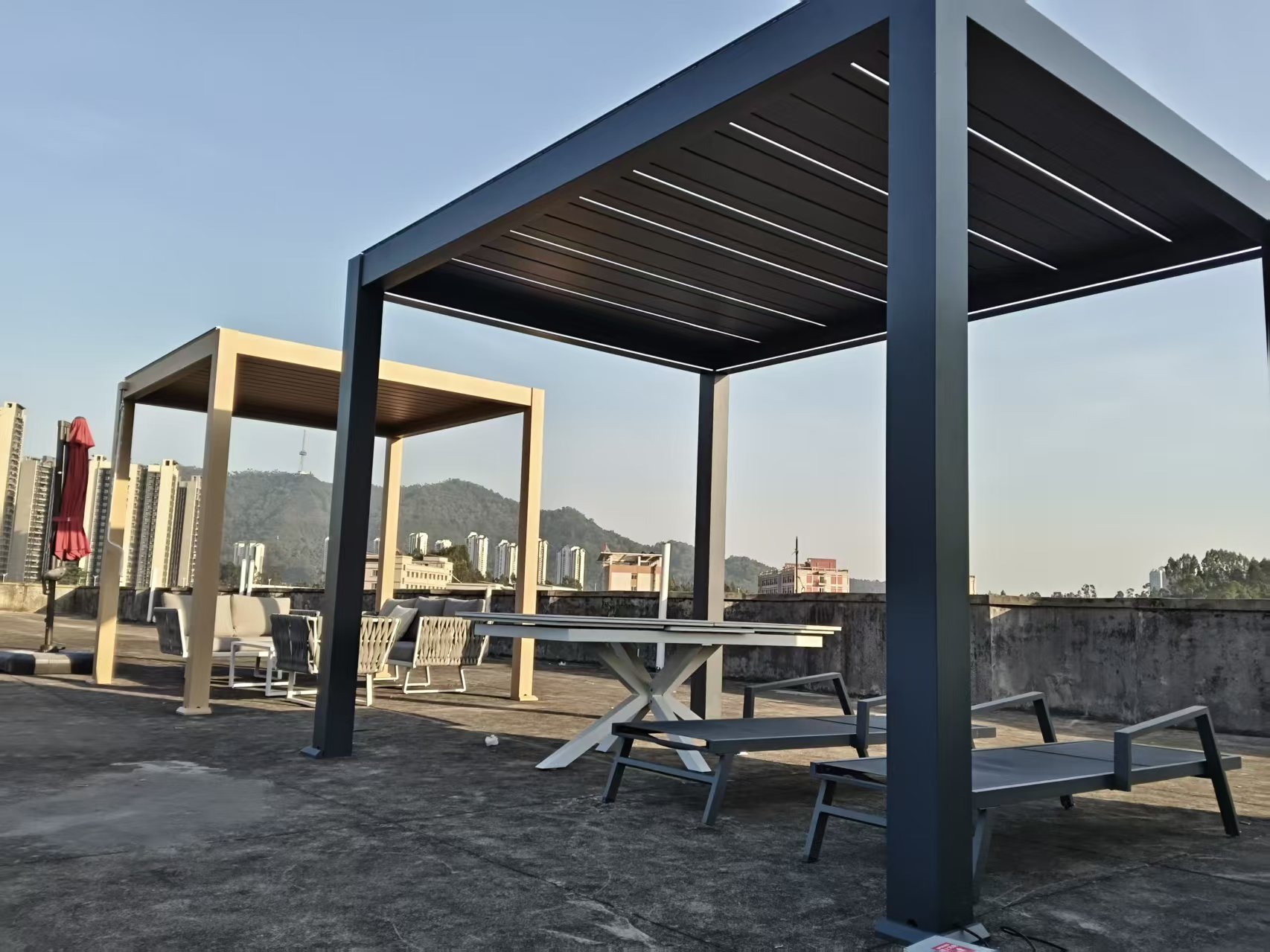
The initial cost of a pergola is significantly lower than that of a gazebo (gazebos typically cost 2–3 times more than pergolas due to their complex structure and high material requirements), yet its functionality far exceeds that of an arbor. Not only does it provide a comfortable shaded space, but it also serves as a visual focal point in the garden. Paired with lighting, vines, and outdoor furniture, it effortlessly creates dining areas, relaxation zones, and entertainment spaces—truly a multi-purpose structure.
From a long-term perspective, pergolas are built with durable materials (typically pressure-treated wood or metal, capable of withstanding wind and rain) and require minimal maintenance, eliminating the need for frequent repairs. Additionally, they can be easily modified without requiring complete demolition, further reducing long-term costs. Whether for families prioritizing practicality or homeowners seeking an elegant garden, a pergola maximizes the value of your outdoor space with a reasonable investment.
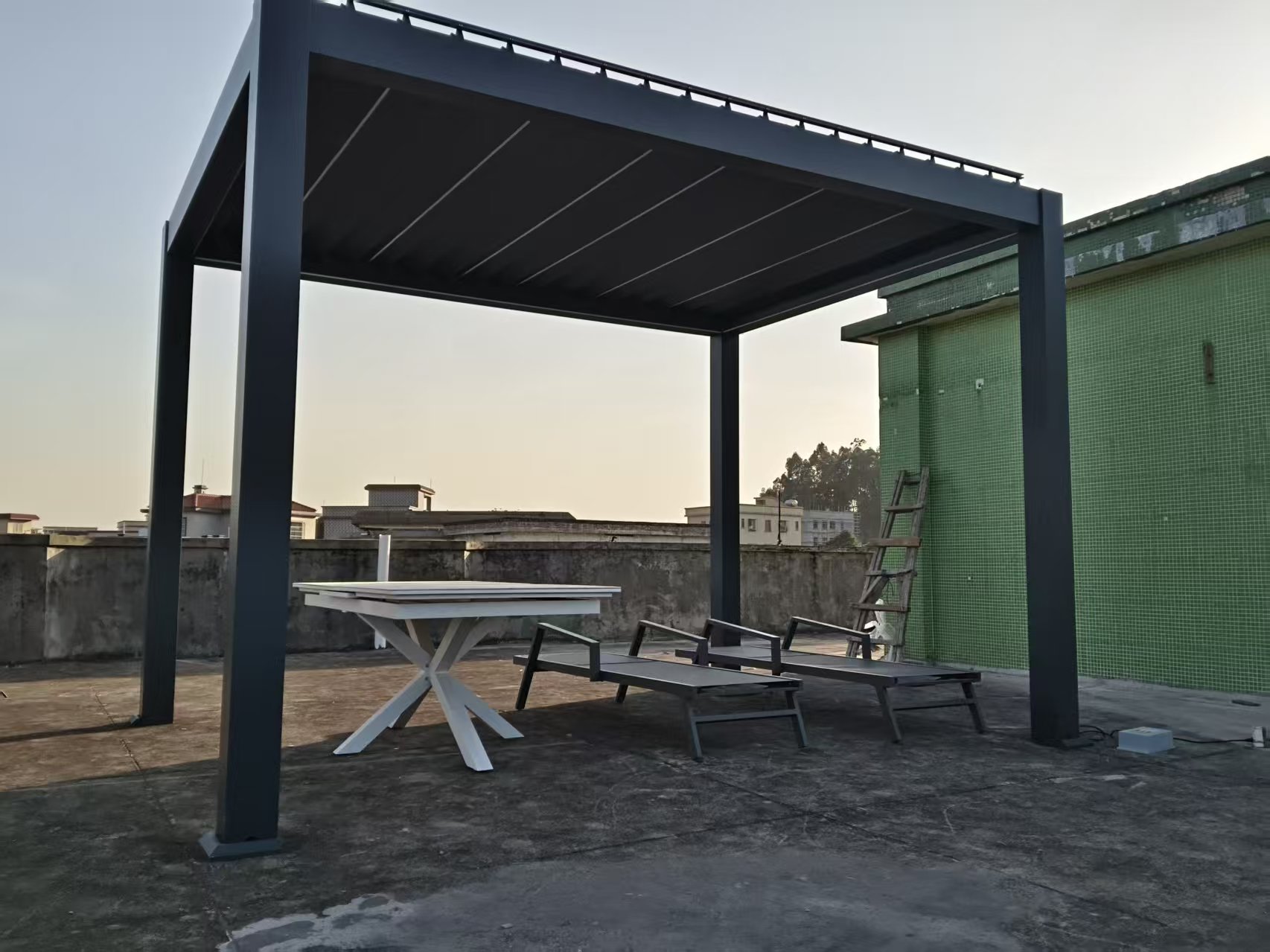
If your priority is “primarily decorative, with no need for practical functionality,” an Arbor is suitable for you, though its practicality is limited; if your priority is “high-end privacy, ample budget, and you don’t mind a complex installation,” a Gazebo is an option, but it offers poor value for money; however, if your priority is “a balance of aesthetics, practicality, cost-effectiveness, and easy installation,” and you want a flexible and adaptable outdoor space, then a Pergola is definitely the optimal solution.
It can adorn your garden and create a natural atmosphere like an arbor, while also providing a comfortable resting space like a gazebo. With its high flexibility, ease of installation, and excellent value for money, it has become the top choice for most families looking to create their ideal garden—you can easily enjoy your own outdoor leisure space without complex construction or high costs.
If you want to know more about outdoor furniture , welcome to contact us !


